Cancer has a sweet tooth—and that craving might be more revealing than scientists once thought.
In “Profiling the pancreatic cancer secretome with metabolic glycoengineering,” published in the Journal of Biological Chemistry, a Johns Hopkins research team shows that exploiting tumor cells’ appetite for sugar can make stealthy pancreatic cancer proteins easier to detect. The approach also triggers a massive surge in extracellular vesicles (EVs), nanoparticles that are central to how cells communicate. Together, these findings could open new avenues for both diagnostics and therapeutic research.
“Our cells are producing proteins and other molecules all the time, so finding cancer-specific signals is much like looking for a needle in a haystack,” said Kevin Yarema, the study’s principal investigator and a senior lecturer in the Department of Biomedical Engineering. “By exploiting cancer’s preference for sugar, we can ‘remove the hay,’ enriching the sample with cancer-specific proteins and making them easier to detect.”
Yarema teaches Biomedical Applications of Glycoengineering, 585.744, and Biochemical and Cellular Engineering, 585.746, in the Engineering for Professionals Applied Biomedical Engineering master’s program.
Pancreatic cancer is notoriously difficult to catch early because symptoms rarely emerge until the disease has spread; it carries a five-year survival rate of just 13%, according to the American Cancer Society. Finding early, dependable biomarkers is an urgent priority, particularly because the only FDA-approved biomarker, CA19-9, has limited diagnostic value and is primarily used to monitor treatment response and disease recurrence.
Traditional detection methods scan blood for proteins produced in large quantities by cancer cells. But separating those signals from the background “noise” of normal cellular activity can be difficult—like trying to hear a specific whisper in a packed stadium.
To amplify cancer signals, the team turned to a near universal quirk of cancer cells: the over-production of sialic acid. This unique 9-carbon sugar differs from most sugar building blocks in human cells, which consist of six carbons.
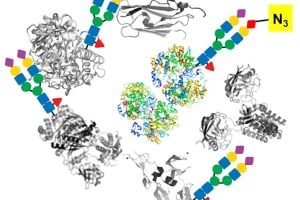
In the study, the researchers exploited this quirk by introducing a chemically modified sugar analog into pancreatic cancer cells, including those derived from patients. The tumor cells eagerly absorb these synthetic sugars, which act as chemical “tags” that amplify faint cancer signals that were previously hard to detect and potentially help the immune system recognize tumor cells more easily.
Although the study’s initial goal was early cancer detection, the experiments led to a surprising discovery. The sugars exposed many more tumor-associated proteins, but they also boosted production of extracellular vesicles by tenfold or more.
“We didn’t expect to see such a dramatic effect,” said Kris Dammen-Brower, the study’s lead author and a fourth-year PhD student in Yarema’s lab.
However, this effect comes with a catch: because extracellular vesicles can also help tumors grow, using these specific sugar molecules directly in cancer patients may ultimately prove problematic. In light of these potential pitfalls, Dammen-Brower said this discovery has pivoted the team toward applications in regenerative medicine, where controlled extracellular vesicle production could be a powerful tool for tissue repair.
“Now we are thinking about therapeutics involving extracellular vesicles, which is still a very new field,” said Dammen-Brower. “There’s big potential for using this approach to increase extracellular vesicles in injured tissues, essentially leveraging a natural recovery process to speed up healing.”
The team is already collaborating with other labs to explore how the sugars affect extracellular vesicle release in muscle and neural stem cells. But they haven’t abandoned the fight against pancreatic cancer.
“The other route is to focus on the proteins we’ve uncovered and determine whether they’re viable targets for cancer therapy,” said Dammen-Brower. “We hope other researchers will look at these findings and think, ‘We know how to go after this,’ and ultimately drive real progress in cancer treatment.”