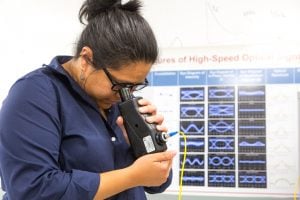
Master’s in Applied Physics Program Overview
Applied physics graduate program rankings consistently place the Engineering for Professionals program at the top—for good reason. As one of the few online applied physics programs in the nation, our students take courses that enrich their experience as an engineer and will prepare you for exciting careers in the research and development of cutting-edge technology.
Career opportunities in applied physics are vast, including jobs in fiber optics, astrophysics, laser and quantum optics, nondestructive testing, and more. Taught by notable scientists from the Johns Hopkins Physics Lab, NASA, and the Naval Research Laboratory, you’ll focus on a wide range of topics, including optics, interstellar space, ocean science, solid-state physics, and more.
In this program, you will
- Master mathematical methods that are essential to the fields of applied physics and engineering, including integral transforms, ODEs, complex analysis, PDEs, and boundary value problems.
- Solve practical problems using Maxwell’s Equations and classical electrodynamics, such that static and time-varying fields in free space and media, conservation laws, and gauge invariance can be investigated.
- Establish a firm understanding of the mathematical foundation of quantum mechanics.
- Select courses to tailor your degree and gain the knowledge that works best for you.
Applied Physics Master’s Degree Concentrations
A concentration can be selected but is not required. Concentrations appear on your transcript to indicate an area of extra focus as part of the degree.
- Materials and Condensed Matter: Combine concepts from the Applied Physics, Electrical and Computer Engineering, and Materials Science and Engineering programs for a well-rounded, holistic approach to applied physics.
- Photonics: Study applied physics, electrical and computer engineering and photonics concepts for a defined approach for the practical application of light.
Programs
We offer two applied physics graduate programs; you can earn a Master of Science in Applied Physics or a post-master’s certificate.
Applied Physics Courses
Get details about course requirements, prerequisites, concentrations, and electives offered within the program. All applied physics courses are taught by subject-matter experts who are executing the technologies and techniques they teach. For exact dates, times, locations, fees, and instructors, please refer to the course schedule published each term.
Program Contacts
-
 Email:Jason.kalirai@jhuapl.edu
-

-
Email:azylins1@jhu.edu
-
Email:Andrew.Marshall@jhuapl.edu
-
Email:joan.hoffmann@jhuapl.edu
-
 Email:ed.hawkins@jhuapl.edu
Tuition and Fees
Did you know that 78% of our enrolled students’ tuition is covered by employer contribution programs? Find out more about the cost of tuition for prerequisite and program courses and the Dean’s Fellowship.
“I liked the ability to have online courses as well as in-class courses, a nice balance for me was taking one in-class and one online course. That felt like the right mix of challenging but not overwhelming. ”
Why Hopkins?
Apply yourself and you never know what can happen. Take the next step of your career with Johns Hopkins University.
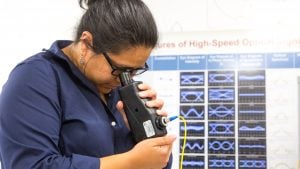
Industry-Specific Knowledge - Unique to Engineering for Professionals, faculty are senior-level, notable professionals who are the decision-makers and changemakers in the industry. For you, this means you learn the latest techniques, technologies, and solutions-based strategies to start enhancing your career, immediately. Learn More

Student Resources - Your academic success is important to us. As a Johns Hopkins University student, you’ll have access to a variety of resources to support your successful path to completing your degree. Learn More
Engineers See the World Differently - Watch our video to revisit the inspiration that sparked your curiosity in science and engineering.
“As a whole, the teachers at JHU were among the best I have ever had in my academic career. I truly believe I have received a great education that has helped me in my professional career. ”
Academic Calendar
Find out when registration opens, classes start, transcript deadlines and more. Applications are accepted year-round, so you can apply any time.
-

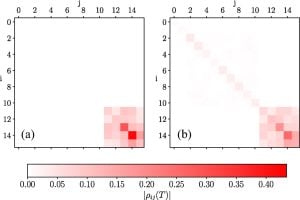
"Today’s models are commonly too simplistic to capture how quantum noise affects computation on real hardware. Our work is trying to bridge that gap."
-
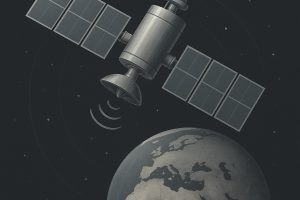
The course has been continuously redesigned to address industry needs and reflect the fast pace of advances in the field
-
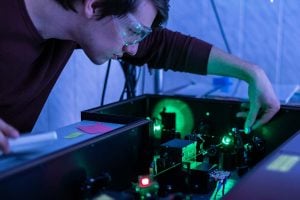
JHU EP explains the application of applied physics for engineering professionals.
Applied Physics FAQ
A: Career opportunities for those with a Master’s in Applied Physics include jobs in fiber optics, astrophysics, laser and quantum optics, nondestructive testing, and more. JHU EP students and alumni enjoy access to our robust range of career resources.
A: Those who have completed a master’s degree can earn 20% or more above their bachelor’s degree peers per year. Keep in mind, too, that a master’s program offers you the chance to gain specialized and in-demand skills and knowledge, as well as expand your professional network.
A: If your prior education does not include the prerequisite courses, you may still be admitted under conditional status, followed by full admission once you have satisfactorily completed a set of conditional courses. Conditional courses will be selected from the suite of Applied Physics graduate course offerings, and once satisfactorily completed, count towards your degree.
A: Some data indicates a median annual salary for physicists is approximately $139,000 with mid-level roles frequently exceeding $100k
Source: ZipRecruiter