
Master’s in Chemical and Biomolecular Engineering Program Overview
Meet workforce demands with knowledge from Johns Hopkins Engineering’s challenging courses and a modern curriculum covering a broad range of topics in chemical and biomolecular engineering. From biotechnology to nanotechnology and the environment, studies in this master’s degree program will prepare you for leadership positions in multiple industries, including biopharma, energy, electronics, and green manufacturing for fuels and chemicals. Faculty are accomplished researchers, scientists, and practitioners. As a graduate, you will be well prepared to:
- Apply chemical engineering knowledge to solve pharmaceutical process problems, including understanding the constraints in regulatory requirements that affect drug development.
- Solve open-ended complex engineering problems in colloid and interfacial science.
- Demonstrate proficiency in using mathematical tools and formalism to problem solve.
- Take on advanced roles and progress as a leader in the field.
Chemical and Biomolecular Engineering Master’s Degree Focus Areas
A focus area can be selected but is not required.
- Biotechnology
- Nanotechnology
Programs
We offer a Master of Science in Chemical and Biomolecular Engineering.
Chemical and Biomolecular Courses
Get details about course requirements, prerequisites, and electives offered within the program. All courses are taught by subject-matter experts who are executing the technologies and techniques they teach. For exact dates, times, locations, fees, and instructors, please refer to the course schedule published each term.
Program Contacts
-
Michael Betenbaugh
Program Chair Chemical and Biomolecular Engineering -
Email:azylins1@jhu.edu
Tuition and Fees
Did you know that 78% of our enrolled students’ tuition is covered by employer contribution programs? Find out more about the cost of tuition for prerequisite and program courses and the Dean’s Fellowship.
Why Hopkins?
When ambition meets opportunity, anything is possible. Earn your degree on your terms at Johns Hopkins Engineering for Professionals.
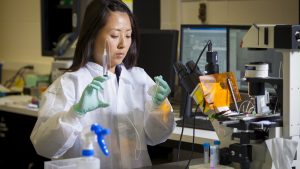
Industry-Specific Knowledge - Unique to Engineering for Professionals, faculty are senior-level, notable professionals who are the decision-makers and changemakers in the industry. For you, this means you learn the latest techniques, technologies, and solutions-based strategies to start enhancing your career, immediately.
Engineers See the World Differently - Watch our video to revisit the inspiration that sparked your curiosity in science and engineering.

Beyond Rankings: We help you fulfill your vision. - We are proud to be ranked among the top online graduate engineering schools by U.S. News & World Report. But we’re about more than just numbers and rankings—we’re focused on making sure you flourish as a learner and engineer.
“I really liked the flexibility and availability of courses that were offered at night so that I could work full time and also attend class. ”
Academic Calendar
Find out when registration opens, classes start, transcript deadlines and more. Applications are accepted year-round, so you can apply any time.
-


Explore the transition into four different chemical engineering career pathways. Learn about specializations, transferable skills, and how to advance.
Chemical and Biomolecular Engineering FAQ
A: Students who have completed this master’s degree program have gone on to leadership positions in multiple industries, including biopharma, energy, electronics, and green manufacturing for fuels and chemicals. During and after your program, you’ll enjoy full access to JHU EP’s full range of professional development opportunities.
A: Professionals with master’s degrees almost always earn significantly more than their peers with only bachelor’s degrees. That’s because a master’s program trains you in in-demand, specialized areas of chemical and biomolecular engineering, while also offering you invaluable hands-on experience. Throughout the program, you’ll have many opportunities to network with established industry professionals.
A: If your prior education does not include the prerequisites, you may still be admitted under provisional status, followed by full admission once you have completed the missing prerequisites. Missing prerequisites may be completed with Johns Hopkins Engineering (all prerequisites are available) or at another regionally accredited institution.
The average salary for a professional with a Master’s in Chemical and Biomolecular Engineering is generally between $82,000 and $120,000+ per year (source US Labor of Statistics) A 2023 AICHE survey showed median salary of $150,000 for chemical engineers