Master’s in Materials Science and Engineering Program Overview
The Johns Hopkins Engineering for Professionals Materials Science and Engineering graduate program is led by expert engineers and scientists, gain the in-demand skills to tackle the most pressing challenges in the industry from nanotechnology to electrochemistry. Whether you work in the field of transportation, communication, biomedicine, aerospace, or energy, our program broadens your ability to design improved materials for use in multiple industries. The advanced and modern curriculum capitalizes on the profound research and expertise of the Johns Hopkins Applied Physics Lab and the Johns Hopkins Extreme Materials Institute.
This highly collaborative and hands-on program gives you the opportunity to:
- Master the connections between materials’ structure and performance.
- Learn how newly engineered materials can be used in modern technologies.
- Apply the structure, thermodynamics, and kinetics of materials to the design of new engineering materials and to the development of advanced characterization methods.
- Be prepared to lead with confidence with knowledge you can incorporate immediately in your work.
- Enjoy the flexibility of learning while working.
Materials Science and Engineering Master’s Degree Focus Areas
A focus area/concentration can be selected but is not required.
- Biotechnology
- Nanomaterials
Materials Science and Engineering Master’s Degree Concentration
A focus area/concentration can be selected but is not required. A concentration will appear on your transcript to indicate an area of extra focus as part of the degree.
- Nanotechnology
Programs
We offer one program option for Materials Science and Engineering; you can earn a Master of Science in Materials Science and Engineering online or onsite.
Materials Science and Engineering Courses
Get details about course requirements, prerequisites, concentrations, focus areas, and electives offered within the program. All courses are taught by subject-matter experts who are executing the technologies and techniques they teach. For exact dates, times, locations, fees, and instructors, please refer to the course schedule published each term.
Program Advisors
Knowledgeable and supportive advisors are here to help guide you through the program. Take a look at our specially designed advisor page to get answers to your questions about admissions, prerequisites, and so much more.
Program Contacts
-
 Email:spicer@jhu.edu
-
Email:azylins1@jhu.edu
Tuition and Fees
Did you know that 78% of our enrolled students’ tuition is covered by employer contribution programs? Find out more about the cost of tuition for prerequisite and program courses and the Dean’s Fellowship.
Why Hopkins?
When ambition meets opportunity, anything is possible. Earn your degree on your terms at Johns Hopkins Engineering for Professionals.
Expert Faculty - Our classrooms are incubators for real-time, solutions-based knowledge you can apply to your work. You will study with faculty who are true pioneers in their field and get exceptional one-on-one mentoring to set you on a course to be a confident, knowledgeable leader in the field.

Beyond Rankings: We Help You Fulfill Your Vision - We are proud to be ranked among the top online graduate engineering schools by U.S. News & World Report. But we’re about more than just numbers and rankings—we’re focused on making sure you flourish as a learner and engineer.

Student Resources - Your academic success is important to us. As a Johns Hopkins University student, you’ll have access to a variety of resources to support your successful path to completing your degree.
“I liked working with the professors and hearing about new developments in their fields. ”
Academic Calendar
Find out when registration opens, classes start, transcript deadlines and more. Applications are accepted year-round, so you can apply any time.
-


Experimental physicist joins nearly three dozen past or present APL staff members to secure this designation since its inception in 2007.
-

Robert Osiander's teaching is informed by his work as a staff physicist in the Space Exploration Sector at JHU's Applied Physics Laboratory.
-
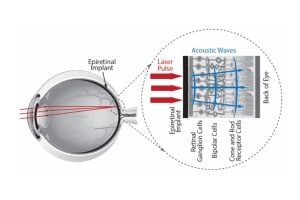
EP Materials Science and Engineering Chair James Spicer works to shape nanomaterial that converts light into sound, activating damaged eye cells.
Materials Science Engineering FAQ's
A: Our materials science and engineering graduates have found promising and fulfilling careers in fields ranging from transportation to communication, biomedicine, aerospace, pharmaceutical, and energy. JHU EP is with you every step of the way, both during your program and after graduation. You’ll have unlimited access to our full range of professional development programs and tools.
A: Master’s degrees are often thought of as investments. Upon completion of your program, you can expect to earn more than you would with only a bachelor’s degree. That’s on top of the invaluable networking opportunities and specialized training you’ll receive during your program.
A: If your prior education does not include the prerequisites, you may enroll under provisional status, followed by full admission once you have completed the missing courses. Missing prerequisites may be completed at the Johns Hopkins University or at another regionally accredited institution. A grade of B– or better must have been earned in each of the prerequisite courses.
Mid-career professionals earning $90,000–$120,000+. Senior-level specialists in industries like aerospace, semiconductors, or R&D often command salaries exceeding $120,000–$160,000.
Source: Research.com