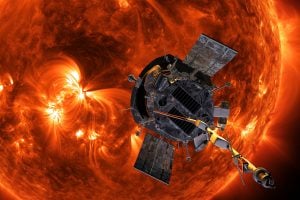
Master’s in Space Systems Engineering Program Overview
As a student in the online space systems engineering degree program, you’ll learn from top subject-matter experts and practitioners from across the space community, including the Johns Hopkins University Applied Physics Lab. Delve deeper into the aerospace industry and study under professors and mentors who are involved with the New Horizons Pluto mission or the new Dragonfly mission.
You will study the formal systems engineering method, first as applied to entire space missions, and then with ever-increasing technical rigor, as applied to flight and ground systems and subsystems. The program provides in-depth opportunities to dissect and analyze case studies of current topics drawn from relevant real-world programs like the use of AI and practical space systems operations.
Master’s in Space Systems Engineering Student Benefits
Additionally, unique to our program, students learn to design spacecraft, including thermal control, power, communication systems, and more. You will be prepared to:
- Demonstrate proficiency in applying the fundamental principles of systems engineering to the analysis and definition of space systems.
- Demonstrate knowledge and technical proficiency to analyze and create a concept for a space mission and an integrated design of the spacecraft that executes that mission.
- Through the use of test equipment In a laboratory environment, apply critical systems thinking skills to the demonstration and application of a hands on integration and test experience of the major subsystems of a benchtop spacecraft, to include the execution of and subsequent data analysis of a student developed and implemented test plan.
- Select technical elective courses to tailor your degree and gain the knowledge that works best for you.
Program Contacts
-
 Email:kristin.fretz@jhu.edu
-
 Email:will.devereux@jhu.edu
-
 Email:nicholas.rotunda@jhu.edu
-
 Email:elizabeth.congdon@jhuapl.edu
-
Email:azylins1@jhu.edu
-
 Email:hayley.beach@jhuapl.edu
“Phenomenal team of passionate space professionals, experts at blending the practical acumen of numerous successful, complex space missions with the academic and intellectual rigor required to innovate and excel in the space domain. ”
Programs
We offer one program for our Space Systems Engineering degree—a Master of Science in Space Systems Engineering.
Space Systems Courses
Get details about course requirements, prerequisites, focus areas, and electives offered within the program. All courses are taught by subject-matter experts who are executing the technologies and techniques they teach. For exact dates, times, locations, fees, and instructors, please refer to the course schedule published each term.
Tuition and Fees
Did you know that 78% of our enrolled students’ tuition is covered by employer contribution programs? Find out more about the cost of tuition for prerequisite and program courses and the Dean’s Fellowship.
Why Hopkins?
When ambition meets opportunity, anything is possible. Earn your degree on your terms at Johns Hopkins Engineering for Professionals.
Network and Connect - Your knowledge is stronger with a network. In the applied and computational mathematics program, you will make career-advancing connections with accomplished scientists and engineers who represent a variety of disciplines across many industries. Learn More
Engineers See the World Differently - Watch our video to revisit the inspiration that sparked your curiosity in science and engineering.
Beyond Rankings: We Help You Fulfill Your Vision - We’re proud of our ranking as one of the top online graduate engineering schools by U.S. News & World Report, but our true strength lies in much more than our numbers. Our number one goal is to prepare you for the space systems engineering career you’ve been dreaming of. Learn More
“The EP program offered the flexibility I needed to be able to complete my Master’s degree while working full-time and raising my young daughter. My instructors were always receptive to any communications and offered as-needed flexibility on assignments based on any personal or professional schedule conflicts I encountered. The ability to be able to complete most of my coursework from home, at a reasonable pace based on my schedule, was one of the defining characteristics of my experience. ”
Space System Engineering Master's FAQs
Flexibility is the driving force behind all of our engineering for professional programs. As such, we let our students complete their master’s degrees within five years of acceptance. Pile on courses one semester or take one off. Find what works for you.
On average, space systems engineering alumni make upwards of $100,000 after completing their degrees.
Yes, however, applicants’ prior education must include an undergraduate or graduate degree in a quantitative discipline (eg: engineering, computer science, mathematics, physics, or equivalent) from a regionally accredited or university.
The Engineering for Professionals program was designed with working professionals in mind. Therefore, we offer both synchronous and asynchronous courses to accommodate your busy schedule.
Yes, you can apply as a non-degree-seeking student.
Space Engineering Master’s Student Outcomes
A space engineering master's program can help you develop specialized expertise at the intersection of aerospace engineering, systems engineering, and space technology. As government agencies and commercial organizations expand their investments in satellites, space exploration, communications systems, and national security initiatives, the demand for professionals with advanced technical knowledge continues to rise.
Whether you're seeking advancement within the aerospace sector or looking to transition into a space system engineering career, graduate education can provide valuable preparation for increasingly complex technical challenges. In addition to technical development, many students benefit from networking opportunities with faculty, researchers, and industry professionals who are already contributing to the rapidly evolving space economy.
Space engineering requires an understanding of how complex aerospace technologies operate together throughout a mission’s lifecycle. During a Master of Science in Space Engineering program, you’ll develop advanced knowledge and skills in areas such as spacecraft design, mission planning, systems architecture, systems integration, satellite communications, and space mission operations.
Because space missions involve significant technical, financial, and operational risks, students also gain experience in risk assessment, requirements analysis, testing and validation, and systems reliability. These capabilities help engineers evaluate mission objectives, identify potential challenges, and develop solutions that improve performance and mission success.
Data analysis and modeling are increasingly important space systems engineering skills as organizations rely on simulation tools to assess spacecraft behavior, orbital dynamics, and mission outcomes before deployment. Students may also strengthen their understanding of project management, technical leadership, and interdisciplinary collaboration.
These skills are essential since even minor design flaws can lead to significant consequences in space operations. Engineers must account for extreme environmental conditions, communication constraints, system failures, and long mission timelines. Advanced training helps professionals make informed decisions that support mission reliability, safety, and performance.
For working professionals, graduate education can also provide exposure to emerging technologies and industry trends, helping position them for advancement in a highly specialized and competitive field.
Graduates often pursue engineering careers in space that focus on the design, development, testing, and operation of spacecraft and related technologies. Common job titles include systems engineer, aerospace engineer, spacecraft systems engineer, satellite systems engineer, mission operations engineer, integration engineer, and program engineer.
Some professionals specialize in satellite communications, remote sensing technologies, space mission planning, or defense-related aerospace systems. Others move into technical leadership and program management positions that oversee large-scale aerospace initiatives.
According to the U.S. Bureau of Labor Statistics, aerospace engineers earned a median annual salary of $134,830 in May 2024. Employment is projected to grow 6% from 2024 to 2034, which is faster than the average for all occupations. The BLS notes that continued interest in spacecraft, satellites, and advanced aviation technologies is expected to contribute to demand for qualified professionals.
A space engineering master’s degree can help professionals qualify for specialized technical roles and strengthen their competitiveness for leadership opportunities within aerospace organizations.
Graduates work across a range of industries connected to the space sector. Aerospace manufacturers employ engineers to design spacecraft, launch systems, payloads, and supporting technologies. Satellite operators rely on space professionals to support communications, navigation, weather monitoring, and Earth observation missions.
Government agencies involved in space exploration, national defense, and scientific research also employ professionals with advanced space systems expertise. Defense contractors look for engineers who can support satellite systems, intelligence platforms, and secure communications networks.
Additional opportunities exist within commercial space companies, research institutions, telecommunications organizations, and emerging space technology startups. As private-sector investment in space continues to expand, professionals in systems engineering and aerospace applications may find opportunities across both established organizations and innovative new ventures.
The combination of technical specialization, systems-level thinking, and industry connections gained through a space master’s program can support both career advancement and long-term professional growth in the expanding global space industry.
Academic Calendar
Find out when registration opens, classes start, transcript deadlines and more. Applications are accepted year-round, so you can apply any time.
-

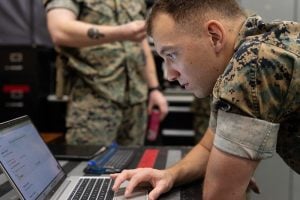
Space Systems Engineering graduate embraces AI’s power to connect sailor innovation to U.S. Navy-scale software
-
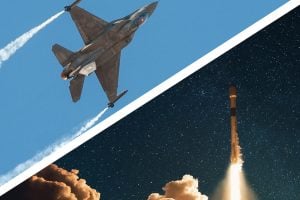
Explore aerospace vs. aeronautical engineering to make the right choice for the next step in your career.
-

Experimental physicist joins nearly three dozen past or present APL staff members to secure this designation since its inception in 2007.