
Master’s in Environmental Engineering Program Overview
Rapid deterioration and consumption of our planets’ natural resources, immense waste production, environmental decline, and climate change are just some environmental issues threatening human health and the well-being of planet Earth and that you will be equipped to tackle in the certificate or master’s in environmental engineering.
Instructors at the helm of pioneering important new environmental initiatives lead the Johns Hopkins Engineering for Professionals environmental engineering graduate programs. These distinguished faculty guide you through the latest techniques used to examine engineering solutions to these complex and multidisciplinary problems.
Through the use of interactive learning tools and online course delivery, experienced instructors delve into the concepts underlying biological, physical, and chemical treatment, preparing students to design and lead projects in real-world settings.
Master’s in Environmental Engineering Student Benefits
Our online, part-time environmental engineering graduate programs can help you:
- Apply engineering and management solutions to municipal solid waste problems utilizing knowledge of contemporary technologies for the design and operation of landfills, incinerators, transfer stations, and processing facilities.
- Apply the basic principles of water and wastewater treatment to the design of major components of drinking water treatment systems, water distribution systems, wastewater collection systems, and wastewater treatment processes.
- Understand more about hazardous waste treatment, storage, and disposal facilities.
- Evaluate environmental and public health hazards, recommending technologies and approaches to cost-effectively eliminate waste and pollution while reducing energy consumption.
Comparing JHU EP’s Graduate Environmental Engineering Programs
At Johns Hopkins Engineering for Professionals, we offer three different programs that cater to various aspects of environmental engineering. Each program offers a master’s degree, Post-Master’s certificate, and graduate certificate option.
- The Environmental Engineering program focuses on the design of environmental engineering processes, infrastructures, remediation technologies, and treatment.
- The Environmental Engineering and Science program focuses on the fundamental concepts of physics, chemistry, biology, and geology as applied in the context of environmental issues, with less emphasis on design and management.
- The Environmental Planning and Management program focuses on the relationships between environmental engineering/science and public policy analysis and the role of economic factors in the environmental management and water resources planning using decision-making tools.
If you have additional questions about the differences between these programs, please reach out to our admissions team so they can help you find the program best for you.
Programs
We offer multiple environmental engineering graduate program options within Environmental Engineering; you can earn a Master's degree in Environmental Engineering, a Graduate Certificate, an Environmental Engineering postgraduate Post-Master’s certificate, or a Climate Change, Energy, and Environmental Sustainability Graduate Certificate.
Environmental Engineering Courses
Get details about course requirements, prerequisites, focus areas, and electives offered within the program. All courses are taught by subject-matter experts who are executing the technologies and techniques they teach. For exact dates, times, locations, fees, and instructors, please refer to the course schedule published each term. Focus areas in the environmental engineering master’s degree require specific courses.
Program Contacts
-
Hedy Alavi
Program Chair Climate, Energy, and Environmental Sustainability, Program Chair Environmental Engineering, Program Chair Environmental Engineering and Science, Program Chair Environmental Planning and Management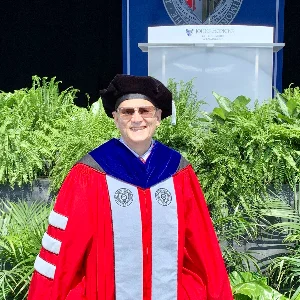 Email:alavi@jhu.edu
-
Christopher Overcash
Program Manager Climate, Energy, and Environmental Sustainability, Program Manager Environmental Engineering, Program Manager Environmental Engineering and Science, Program Manager Environmental Planning and Management Email:coverca1@jhu.edu
-
 Email:hayley.beach@jhuapl.edu
-
Email:meghan.stewart@jhu.edu
Tuition and Fees
Did you know that 78% of our enrolled students’ tuition is covered by employer contribution programs? Find out more about the cost to complete your part-time, online masters in environmental engineering, including tuition for prerequisite and program courses and the Dean’s Fellowship.

Climate Change, Energy, and Environmental Sustainability
As the world's population increases and technological advances accelerate, demands for natural resources and energy continues to threaten Earth's physical and ecological systems. Through this program, you will learn to design and implement solutions to address these challenges. Earn this graduate certificate with just 5 courses.
“It was super convenient to make everything online so that I didn’t need to travel/move to go to school. The ‘weekly’ schedule was also very helpful. As a full-time employee, I could schedule my studies around my schedule and I always felt like I had enough time during the week to complete my assignments. ”
Why Hopkins?
Earning an online masters environmental engineering degree at Johns Hopkins lets you see the world differently.

Network and Connect - Your knowledge is stronger with a network. In the applied and computational mathematics program, you will make career-advancing connections with accomplished scientists and engineers who represent a variety of disciplines across many industries.

Beyond Rankings: We help you fulfill your vision. - We are proud to be ranked among the top online graduate engineering schools by U.S. News & World Report. But we’re about more than just numbers and rankings—we’re focused on making sure you flourish as a learner and engineer.

Industry-Specific Knowledge - Unique to Engineering for Professionals, faculty are senior-level, notable professionals who are the decision-makers and changemakers in the industry. For you, this means you learn the latest techniques, technologies, and solutions-based strategies to start enhancing your career, immediately.
Environmental Engineering Master's Program FAQs
The climate crisis will continue to cause disruptions and harm to both the planet and our societies. By becoming an environmental engineer, you will be doing your part to combat these issues and build a world where the environment and humans can coexist sustainably. The EP environmental engineering postgraduate certificate, master’s degree and graduate certificate programs can prepare you for all of it.
Holders of an environmental engineering master’s degree can use their experience in a variety of roles and industries. Become a pollution control engineer, build energy-efficient buildings as a green building engineer, or research and develop alternative and renewable energy resources.
The 10 required courses for this online, part-time degree must be completed within five years of your first course. It is recommended that students do not take more than two courses a semester to allow for a healthy work-life-study balance.
Environmental Engineering Master’s Student Outcomes
A master's in environmental engineering can help you build advanced technical expertise while preparing for leadership opportunities across environmental projects. Whether you're looking to advance within your current field or transition into a specialized engineering role, graduate study can strengthen both your professional credibility and technical capabilities.
Many environmental engineering master's programs also provide opportunities to collaborate with faculty, industry professionals, and peers who work across government, consulting, and private-sector organizations. These connections can help expand your professional network and support long-term career growth.
Environmental engineering careers require a combination of scientific knowledge, engineering expertise, and analytical problem-solving. During your master’s environmental engineering curriculum, you’ll develop advanced knowledge and skills in areas such as water and wastewater treatment, environmental systems design, air quality management, environmental modeling, risk assessment, and regulatory compliance.
Data analysis and computational modeling are becoming increasingly important. Organizations rely on engineers who can evaluate complex environmental data and identify potential risks, using that to develop evidence-based solutions. A graduate education can help strengthen your ability to assess environmental impacts, optimize engineering systems, and communicate technical findings to stakeholders.
Employers increasingly seek professionals who can combine technical expertise with strategic decision-making, and so project management and interdisciplinary collaboration are equally sought-after skills. Environmental challenges often involve multiple stakeholders, including government agencies, community organizations, scientists, and engineers. Developing the knowledge and skills to manage projects and work across disciplines empowers you to contribute more effectively to large-scale environmental initiatives.
Graduates of environmental engineering master’s programs pursue a variety of environmental engineering careers in both technical and leadership-focused positions. Common roles include environmental engineer, water resources engineer, environmental consultant, remediation engineer, sustainability engineer, environmental compliance specialist, and project engineer.
Some graduates move into management positions overseeing environmental programs, regulatory compliance efforts, or infrastructure projects. Others focus on specialized areas such as groundwater remediation, air pollution control, environmental health, or climate resilience planning.
According to the U.S. Bureau of Labor Statistics, environmental engineers earned a median annual salary of $104,170 in May 2024. Employment in the field is projected to grow 4% from 2024 to 2034, with approximately 3,000 openings projected each year. These figures reflect a continued demand for professionals who can address water quality, pollution control, and environmental sustainability challenges.
A graduate degree may also help position you for advancement into senior engineering, project management, and technical leadership roles that require specialized expertise.
Graduates work across a wide range of industries that depend on environmental expertise. Environmental consulting remains one of the largest employment sectors, supporting clients through regulatory compliance, site assessments, and sustainability initiatives.
Government agencies at the federal, state, and local levels employ environmental engineers to oversee environmental programs, water resources, public infrastructure, and environmental policy implementation. Utilities and public works organizations also rely on environmental engineers to maintain water treatment facilities and wastewater systems.
Opportunities can also be found in energy production, manufacturing, construction, transportation, and environmental technology companies. Organizations in these industries are increasingly prioritizing sustainability goals, emissions reduction strategies, and environmental risk management.
For professionals seeking career advancement, a master’s in environmental engineering can provide the technical depth, industry connections, and leadership-oriented knowledge and skills needed to pursue higher-level responsibilities across multiple sectors.
Academic Calendar
Find out when registration opens, classes start, transcript deadlines and more. Applications are accepted year-round, so you can apply any time.
-

Hedy Alavi selected to receive the 2026 Excellence in Environmental Engineering and Science Education Award by the American Academy of Environmental Engineers and Scientists
-

Jessica Jeffery, MS ’19, an environmental engineer with General Motors, is focused on electrification.
-
Johns Hopkins Engineering for Professionals faculty, like Christopher Overcash, guide students through the latest techniques used to examine engineering solutions to complex and multidisciplinary problems in climate change, waste production, and beyond. A member of our team of instructors for ten years, he examines the future of environmental engineering, science, and management.